
A-IGEco and its member networks are leading seven key initiatives to support economic stakeholders (design offices, construction companies, suppliers, etc.) in the development and structuring of the ecological engineering sector. These initiatives are aligned with the Roadmap for Ecological Engineering – Horizon 2030 (FdRIGE), the LIFE BIODIV’France project, and A-IGEco’s internal strategy.
Discover how these concrete initiatives can strengthen the competitiveness, innovation and sustainability of industry players.
Seven actions to structure and develop economic sectors
Structuring the sector: towards a strategic contract and a dedicated NAF code
Objective: To create a national dialogue space for ecological engineering companies and to study the creation of a NAF code specific to the sector.
Pilots: OFB, A-IGEco, CINOV-TEN, Syntec Engineering
Framework: FdRIGE (Axis 2) and A-IGEco Internal Strategy
→ Why is this important?
A dedicated NAF code would allow for the clear identification of specialized companies, the availability of reliable statistics, and the strengthening of the sector’s legitimacy. An operational working group has been established to structure the market and develop skills.
(Action to be initiated)
Future outlook: workforce planning and skills management
Objective: To conduct a prospective study on the employment and skills needs of the sector by 2030.
Pilots : A-IGEco, OFB, RNF
Framework: FdRIGE (Axis 2) and LIFE BIODIV’France
→ What does it consist of?
This study aims to anticipate changes in professions, identify training needs and propose ways to develop the skills necessary for the growth of the sector.
(Action in progress)
Adapting insurance and guarantees to the challenges of living beings
Objective: To study and adapt insurance and guarantees for studies and work based on living organisms.
Pilots: Syntec Engineering, CINOV-TEN
Framework: FdRIGE (Axis 2)
→ The impact?
This action aims to remove the legal and insurance barriers linked to ecological engineering projects, by adapting the guarantees (ten-year warranty, construction damage insurance, etc.) to the specificities of the sector.
(Action to be initiated)
Integrating technical and scientific advances into public procurement
Objective: To update the specifications in accordance with technical and scientific advances.
Pilots : CGDD, UPGE
Framework: FdRIGE (Axis 2)
→ How does it work?
This action makes it possible to integrate the latest innovations and best practices into public tenders, thus guaranteeing quality projects adapted to ecological challenges.
(Action to be initiated)
Studying the markets that can be mobilized for ecological engineering
Objective: To launch a study on the types of markets where ecological engineering could be mobilized.
Pilots : UPGE, Unep, FNTP
Framework: FdRIGE (Axis 2)
→ Why is this crucial?
This study aims to identify new opportunities for the sector, by analyzing public and private markets where ecological engineering can provide innovative and sustainable solutions.
(Action in progress)
Develop local supply chains and materials, taking into account the specific characteristics of overseas territories.
Objective: To organize and develop local sectors, materials and equipment, integrating the specificities of overseas territories.
Pilots : UPGE, Unep
Framework: FdRIGE (Axis 2)
→ The impact?
This action aims to strengthen the autonomy of territories by promoting the use of local and adapted materials, while addressing the specific challenges of overseas territories.
(Action to be initiated)
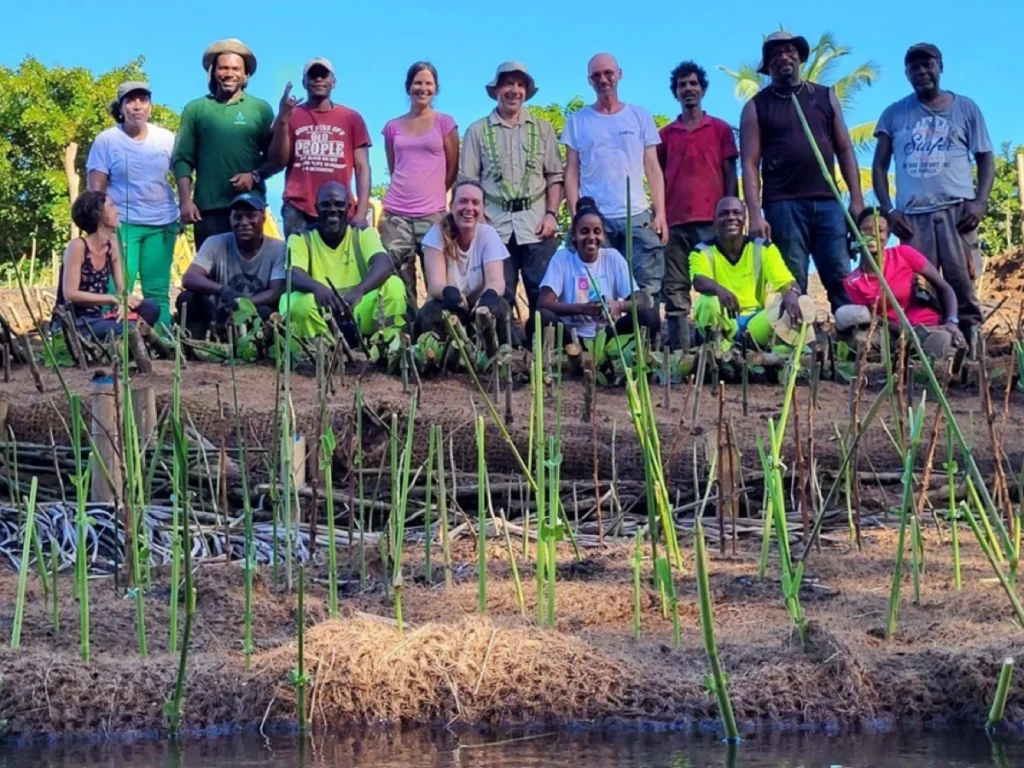
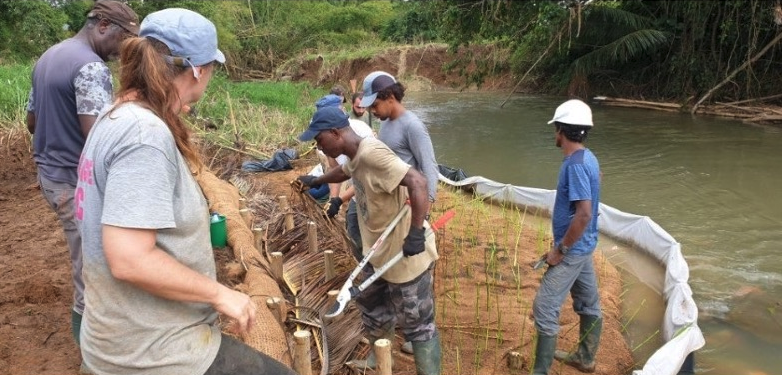
Promote the use of geonets made from natural fibers
Objective: To promote the use of natural fibre geonets in ecological engineering projects.
Pilot : AGéBio
Framework: FdRIGE (Axis 2)
→ Why is this important?
The geonet made of natural fibers is an ecological and sustainable solution for soil restoration and erosion control, aligned with the objectives of ecological transition.
(Action to be initiated)
Why are these actions essential?
These seven levers aim to:
- Structuring the sector to make it a key player in the ecological transition.
- Innovate by integrating the latest technical and scientific advances.
- Developing skills and jobs to meet growing market needs.
- Adapting tools and materials to the specific characteristics of territories, including overseas territories.